

The French subjunctive: learn patterns, then check the meaning
Use common constructions and meaningful contrasts to understand when the subjunctive belongs in a sentence.
The subjunctive is often introduced as the mood of uncertainty. That is a useful hint, but it does not explain every case. French also uses it after expressions of necessity, wishes and emotion—even when the underlying event is real.
Learn complete constructions. The word que alone does not trigger the subjunctive, and “subjective versus factual” is not a sufficient rule.
Start with frequent constructions
| Construction | Example |
|---|---|
| Necessity | Il faut que tu viennes. |
| Wish | Je veux qu’il comprenne. |
| Emotion | Je suis contente que tu sois là. |
| Concession | Bien qu’il pleuve, nous sortons. |
| Before an event | Je t’appellerai avant que tu partes. |
In the emotion example, the person really is present. The subjunctive follows the construction, not a claim that their presence is uncertain.
Notice the contrasts
An affirmative je pense que generally takes the indicative: Je pense qu’il vient. A negative or interrogative construction can involve different choices depending on meaning; it should not be reduced to a rule that every negative sentence automatically takes the subjunctive.
In standard usage, après que takes the indicative, unlike avant que. Affirmative espérer que generally takes the indicative too: J’espère qu’il viendra. These contrasts are good reasons to learn the whole expression rather than responding mechanically to que.
Avoid unnecessary subordinate clauses
When the subject stays the same, an infinitive is often the natural choice: Je veux partir rather than forcing a que clause. Compare it with Je veux que tu partes, where the subject changes.
Practise one meaningful change at a time
Take a familiar sentence and change the construction: a statement becomes a wish, then a necessary action. Check both the verb form and the intended relationship between the ideas.
Keep a small set of reliable examples, including common irregular forms such as sois, aie, fasse and puisse. Add exceptions and more nuanced uses gradually. Accurate, appropriate constructions communicate more effectively than inserting the subjunctive simply to make a text look advanced.
Sources and review
Want to identify your next learning priorities? Contact Global French Education to discuss your current level and course options.
Read next
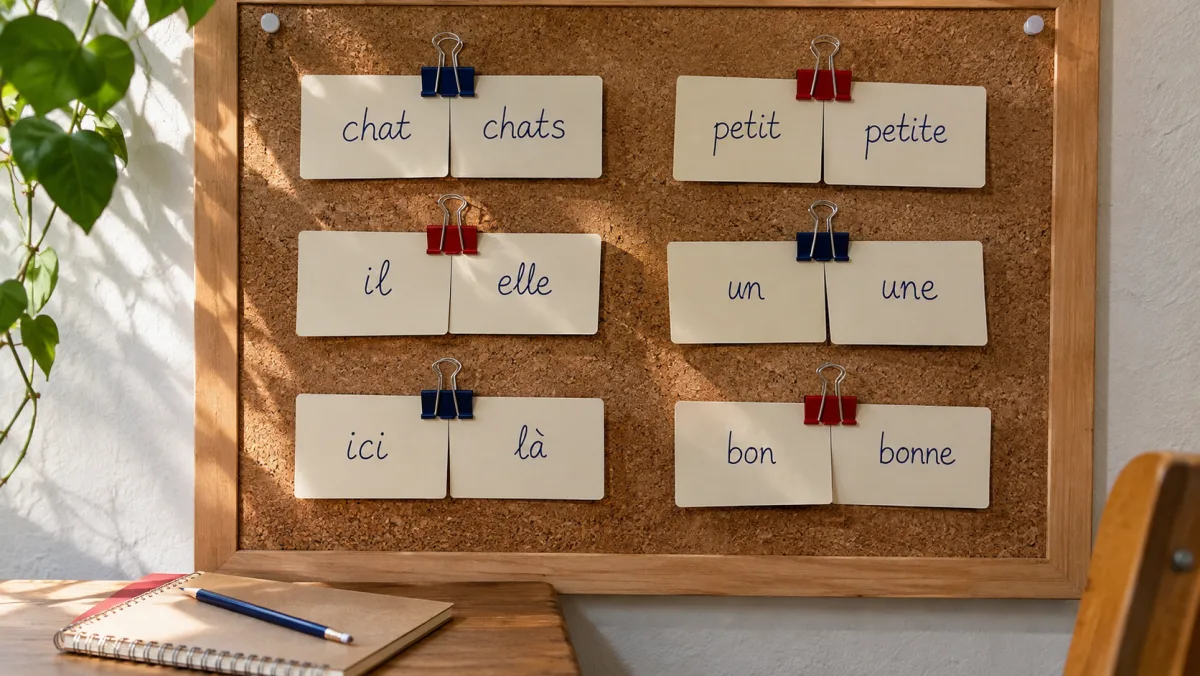
French agreement: build the noun phrase as a unit
Learn articles, nouns and adjectives together, then review past participles as a separate agreement problem.
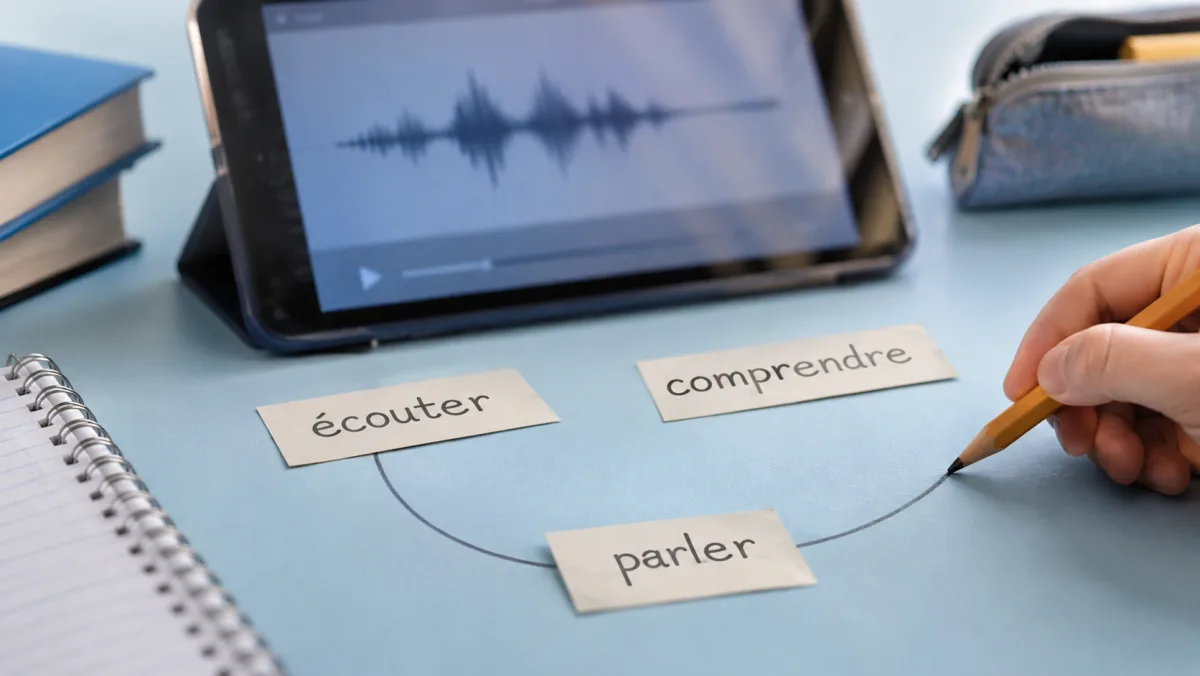
Liaison and elision: hearing connected French
Hear the difference between liaison, elision and enchaînement, including the connections French does not make.

French past tenses: events, background and literary narration
Compare passé composé, imparfait and passé simple through the roles they play in a story.