

French past tenses: events, background and literary narration
Compare passé composé, imparfait and passé simple through the roles they play in a story.

Choosing a French past tense is about how you present an event, not simply whether it happened long ago. The same period can be described in different ways depending on what the sentence is doing.
A useful starting point: the imparfait often sets a scene or describes a habit; the passé composé often presents an event as a bounded whole. These are guides, not automatic rules based on duration.
Put background and event together
Il pleuvait quand je suis sorti. The rain forms the background; going out is presented as an event. Both concern the same moment, but they play different roles in the account.
Now compare Quand j’étais enfant, je jouais au tennis with Hier, j’ai joué au tennis pendant deux heures. The first describes a past habit; the second presents a completed session. A two-hour action can therefore use the passé composé. “Long action” does not automatically mean imparfait.
| Tense | Common role | Example |
|---|---|---|
| Imparfait | Background, habit or ongoing state | La rue était calme. |
| Passé composé | Event presented as a whole | Le bus est arrivé. |
| Passé simple | Events in literary or formal written narration | Le bus arriva. |
Recognize the passé simple without forcing it
The passé simple occurs mainly in written narrative, including fiction and historical accounts. Recognizing it helps reading. Ordinary conversation usually relies on the passé composé instead.
Using a literary tense does not automatically earn extra examination points. Register, accuracy and the task’s purpose matter more than displaying a form that does not fit the text.
Practise with a short personal account
Describe the setting of a recent day, then explain what happened. Underline background information and circle the main events. For each verb, explain the choice rather than matching it to a single time word.
Once those contrasts feel clearer, add the plus-que-parfait for an event that occurred before another past reference point: J’avais déjà mangé quand il est arrivé. French has more than three past forms; this small group gives you a practical starting point for telling a coherent story.
Want to identify your next learning priorities? Contact Global French Education to discuss your current level and course options.
Read next

The French subjunctive: learn patterns, then check the meaning
Use common constructions and meaningful contrasts to understand when the subjunctive belongs in a sentence.
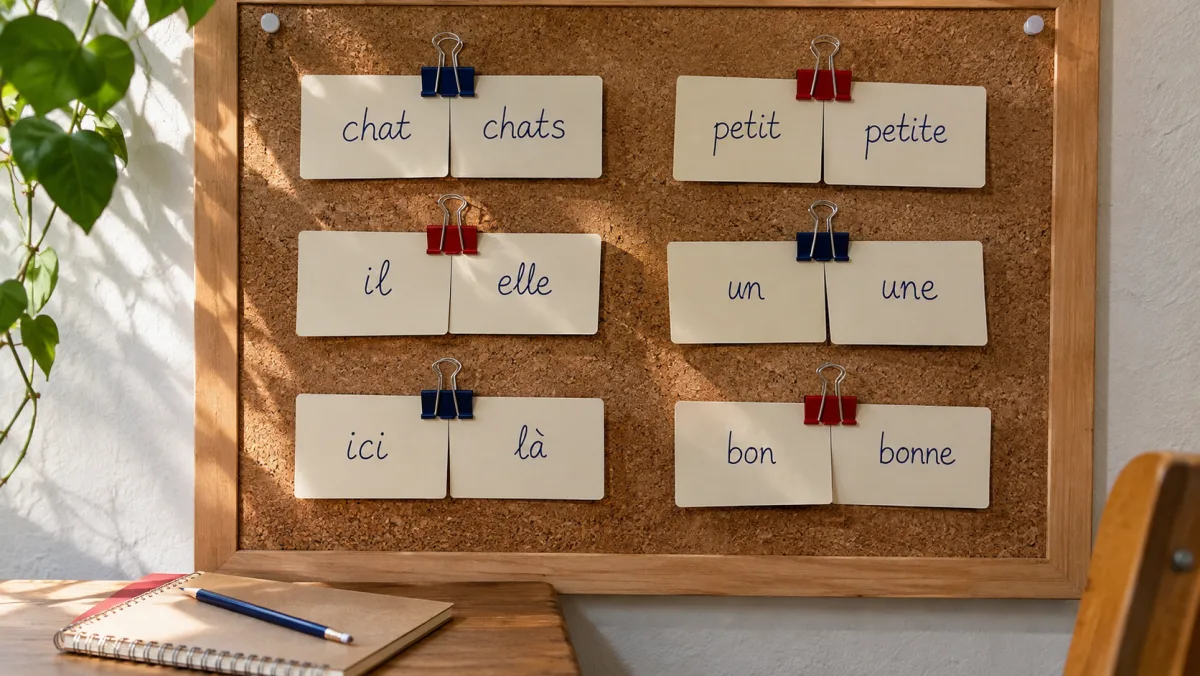
French agreement: build the noun phrase as a unit
Learn articles, nouns and adjectives together, then review past participles as a separate agreement problem.
Liaison and elision: hearing connected French
Hear the difference between liaison, elision and enchaînement, including the connections French does not make.