

Why familiar French words disappear when you need them
Learn useful combinations, recall them without looking and adapt them to new situations.
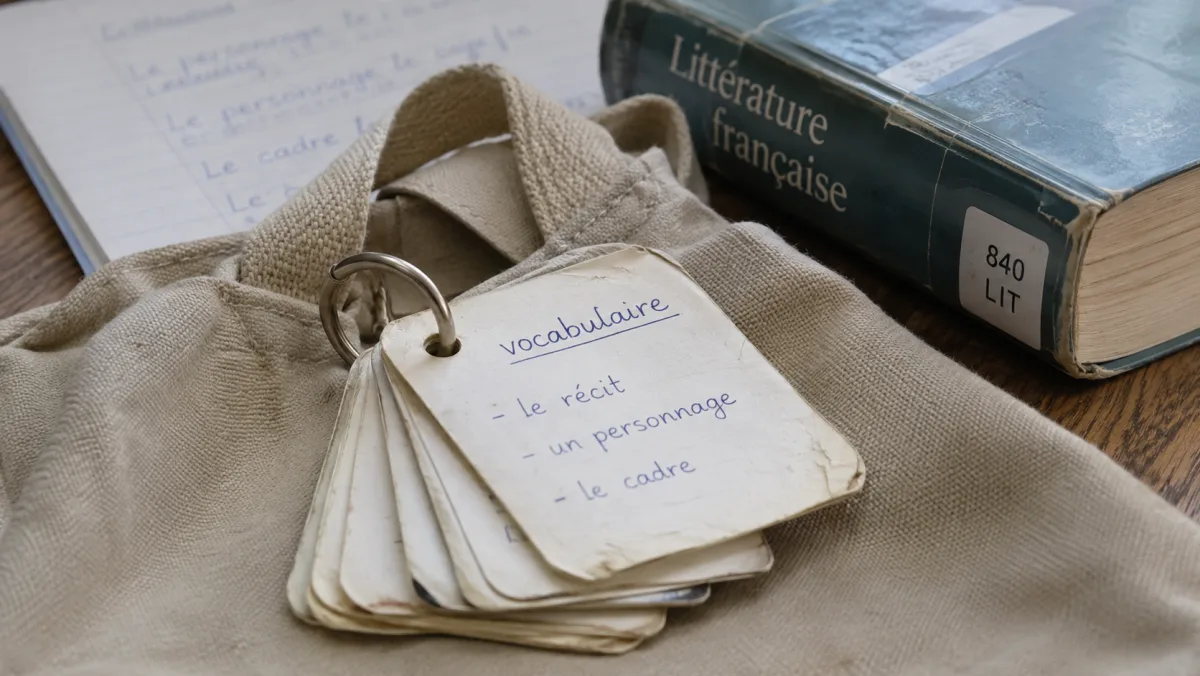
Recognizing a word in a list and retrieving it during a conversation are different tasks. A word can be genuinely familiar while still being difficult to use independently.
Build a route from recognition to use: notice a useful phrase, recall it without looking, then adapt it to something you want to say.
Learn the company a word keeps
Instead of learning only décider, notice décider de faire quelque chose. Instead of storing a noun without context, learn its article and one common combination. These small units carry information about grammar and use.
Choose expressions from material you understand. Copying twenty attractive phrases from a difficult article creates a large review burden without showing when each phrase is appropriate.
Make recall part of the routine
Look at a prompt or situation rather than the French answer. Try to produce the expression, check it and use it in a personal sentence. For prendre rendez-vous, you might explain when you need to book an appointment and with whom.
| Stage | Example of an activity |
|---|---|
| Recognize | Identify the expression in a short dialogue. |
| Recall | Produce it from a situation without reading. |
| Adapt | Change the person, time or purpose. |
| Reuse | Bring it into a later conversation or message. |
If recall fails, that does not mean the earlier learning was worthless. It identifies the next step. Reduce the number of items and make the context more concrete.
Review at intervals and in new contexts
Return to expressions after a gap. Mix a few older items with newer ones, and vary the situation. A phrase that works only in the exact sentence you copied is not yet flexible.
Keep the system small enough to maintain. Five expressions used in several meaningful exchanges can be more useful than a long list reviewed only once. The test is not whether you can translate every entry instantly, but whether useful language becomes easier to retrieve when communication requires it.
Want to identify your next learning priorities? Contact Global French Education to discuss your current level and course options.
Read next

Your first French conversation circle in Toronto
A practical guide to finding a French conversation circle and taking your first turn, with phrases you can use when you arrive.
Missed a phrase in French? Keep listening
Listen to a short message about a changed appointment. Catch the new time even if part of the message goes by too fast.
From beginner to NCLC 7: plan the work, not just the hours
Separate class hours, independent practice and test readiness when estimating your route from beginner French.