

From getting the gist to understanding the detail
A short listening routine that separates evidence from assumptions and turns recurring errors into focused practice.
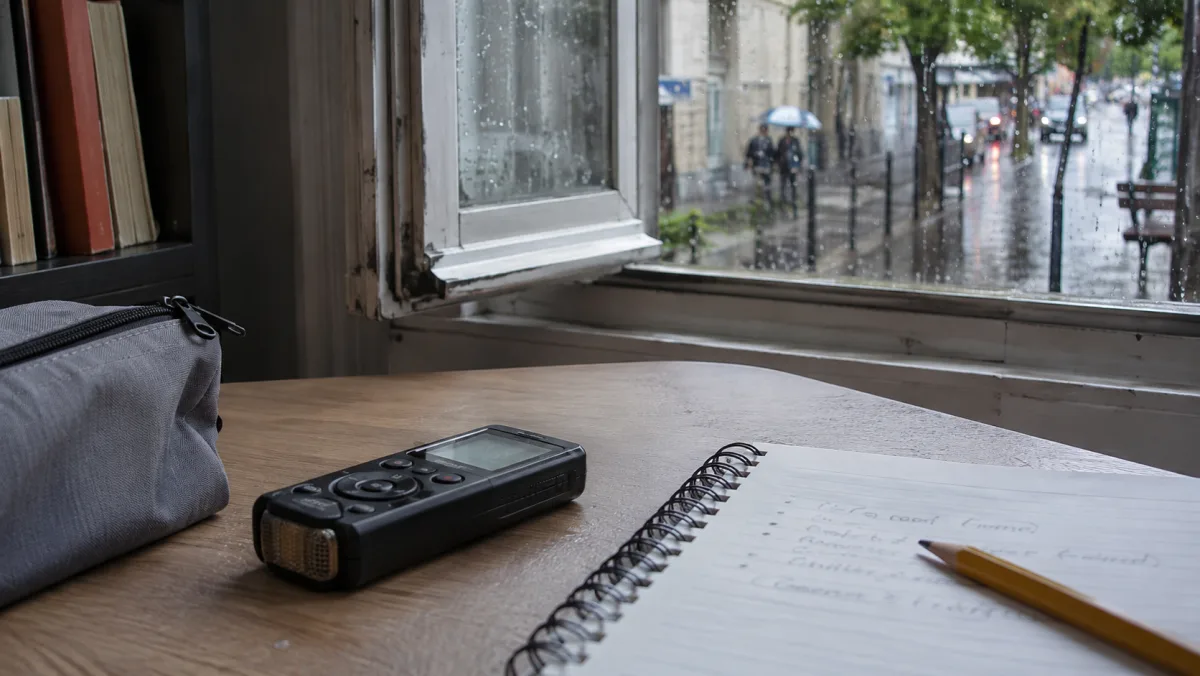
You recognize the topic, catch several familiar words and feel that you understand. Then the answer key disagrees. Often the missing piece is a small distinction: who changed a plan, whether an event is confirmed, or which condition applies.
Separate what you heard from what you inferred. Precision begins when you can identify the evidence for your answer.
Give the first listen a clear purpose
Choose a short recording appropriate to your level. After one play, note the speaker, situation, main message and one important detail. Add a question mark beside anything uncertain.
This prevents a familiar topic from filling gaps in your understanding. Hearing “train,” “tomorrow” and “late” does not establish whether a train is delayed, a booking was changed or someone plans to leave later.
Check the cause of the gap
Listen again, then consult the transcript. Mark the phrase that proves or contradicts your interpretation. Classify the problem: unknown vocabulary, an unfamiliar sound connection, a missed negative or an assumption made too early.
| Difficulty | A focused response |
|---|---|
| You knew the word on paper | Practise recognizing it inside a short spoken phrase. |
| You missed a condition | Note words such as si, sauf and à condition que. |
| You confused speakers | Track who proposes, accepts or objects. |
| You guessed from the topic | Require one supporting phrase for each conclusion. |
Finish by explaining the message
Give a short summary in simple French. Do not copy the transcript. If a detail remains uncertain, say so rather than inventing it. Then listen to a new recording on a related topic to check transfer.
Fifteen focused minutes can produce a useful practice session, but no number of days guarantees a particular jump in level. Track whether repeated error types become less frequent. Keep some enjoyable, less analytical listening as well: sustained attention and precise review serve complementary purposes.
Want to identify your next learning priorities? Contact Global French Education to discuss your current level and course options.
Read next

Your first French conversation circle in Toronto
A practical guide to finding a French conversation circle and taking your first turn, with phrases you can use when you arrive.

Missed a phrase in French? Keep listening
Listen to a short message about a changed appointment. Catch the new time even if part of the message goes by too fast.
From beginner to NCLC 7: plan the work, not just the hours
Separate class hours, independent practice and test readiness when estimating your route from beginner French.