
Inside a speaking lesson: practise, get feedback, try again
A closer look at speaking practice with our local French teachers: what works in your answer, what needs attention, and how to approach different tasks.
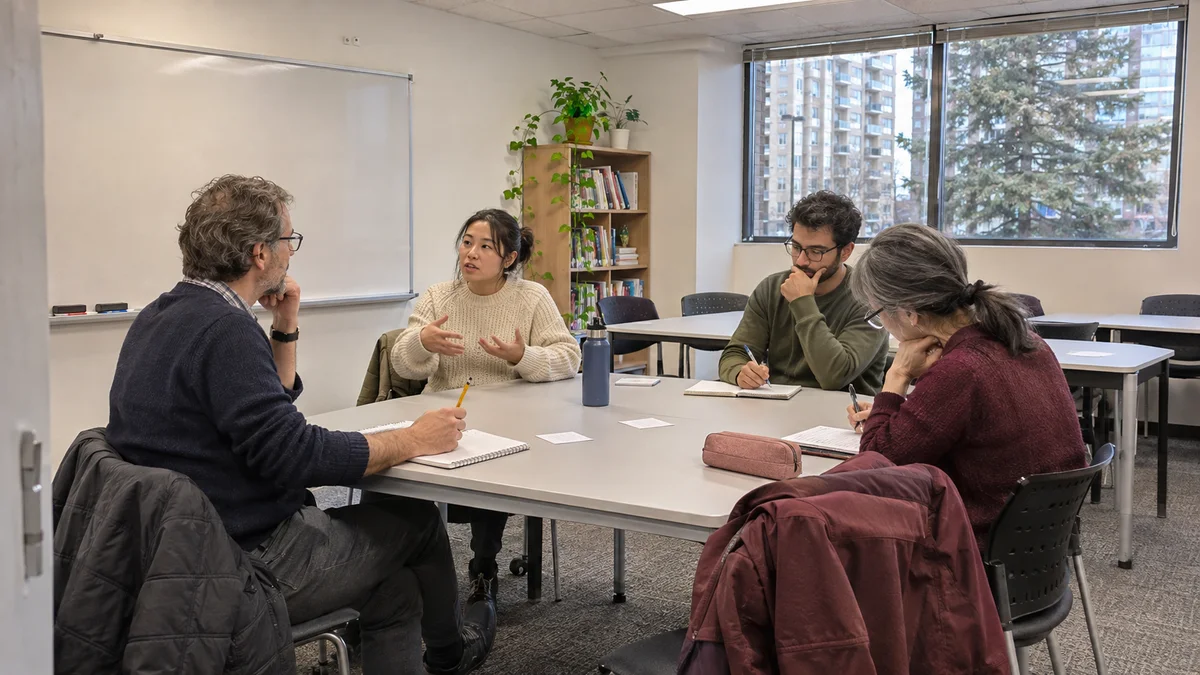
You finish answering a question in French. You found the words, kept the conversation going and made yourself understood. Then comes the question that matters for your next attempt: what, specifically, could make that answer stronger?
At Global French Education, speaking practice with our locally based French teachers connects an exam-style exchange with a detailed explanation of your response. The teacher asks questions, takes the other role in a conversation and helps you understand how your choices relate to the task and its assessment criteria. You practise answering, then learn how to improve the answer you actually gave.
The images in this article are AI-generated learning illustrations, not photographs of our teachers or a particular lesson.
First, understand what the conversation asks of you
An oral examination is more than a series of questions about yourself. Depending on the task, you may need to obtain information, explain a view, develop reasons or persuade someone who raises an objection. Sometimes you need to lead the exchange by asking questions yourself.
The teacher therefore begins with the purpose of the activity. Who are you speaking to? What do you need to achieve? Does the situation call for a formal request or a familiar conversation? Those decisions shape the language you choose.
TEF Canada and TCF Canada have different speaking formats. Practice should follow the examination you are preparing for, rather than treating every oral task as the same interview.
Then, hear what your answer demonstrates
Feedback becomes useful when it refers to a specific moment. Perhaps you answered the opening question clearly but gave no example. Perhaps your first question was appropriate, but you moved to an unrelated question instead of following up on the reply. A recurring pronunciation difficulty may have made a key word hard to understand.
The teacher explains both the successful choices and the parts that limit the response. This gives you something to repeat as well as something to change.
| What happens in the answer | A useful feedback question |
|---|---|
| A clear position with a relevant example | How can you keep this structure on another topic? |
| Several ideas without an obvious connection | Which idea answers the question most directly? |
| A memorized sentence that does not fit the situation | How could you express the same intention naturally here? |
| A question followed by an unrelated question | What follow-up would respond to the information you received? |
These are teaching prompts, not an official scoring grid. Oral assessment considers a performance across criteria; it is not a fixed deduction for every hesitation or a bonus for inserting a particular phrase.
A concrete example: give the listener something specific
Consider this original practice question: Pourquoi apprenez-vous le français ?
A first answer might be:
J’apprends le français parce que c’est important.
The meaning is understandable, but “important” leaves the listener with little information. The teacher can help you identify a real reason and develop it:
J’apprends le français pour pouvoir participer plus facilement aux réunions de mon équipe. Par exemple, je voudrais expliquer mes idées sans préparer chaque phrase à l’avance.
The second version names a purpose and makes it concrete. Its strength comes from relevant detail and a clear connection between the sentences. It is an illustration, not a model to memorize or a response carrying a guaranteed score. Another learner should build an answer around their own experience.
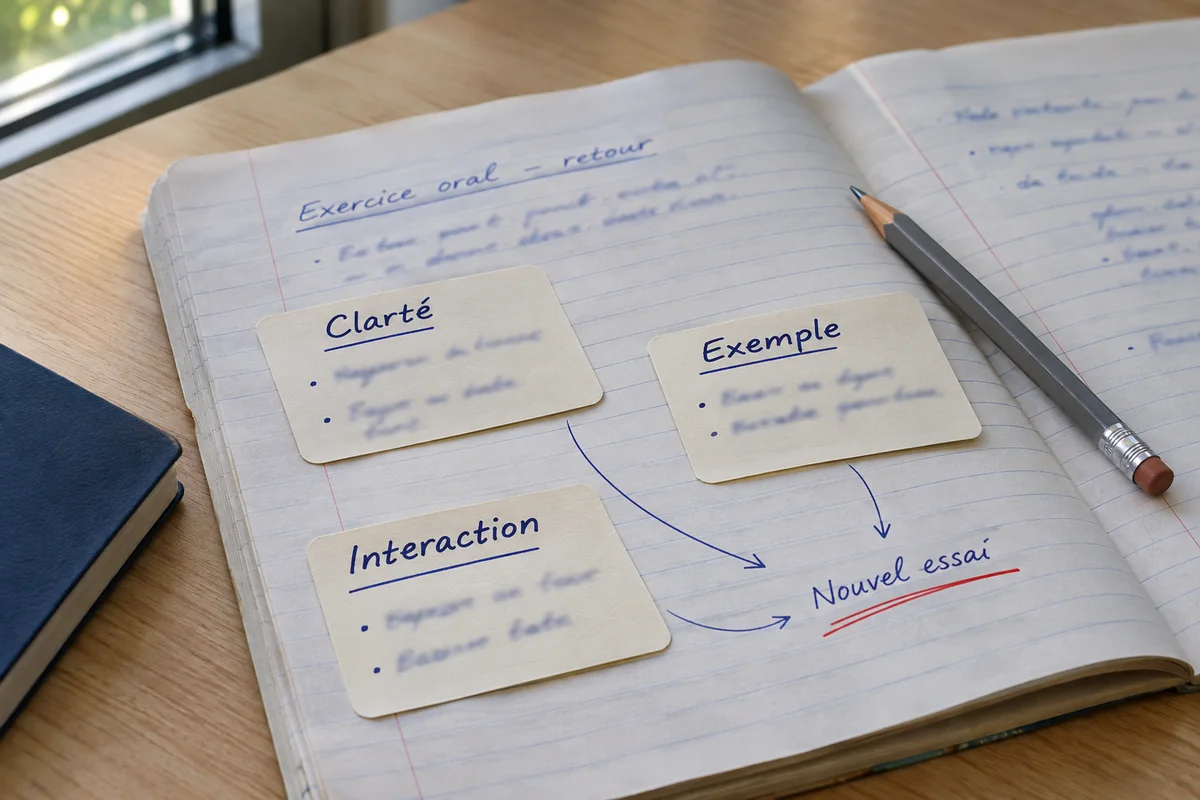
Different tasks need different response strategies
For an information-seeking task, practise asking a clear question, listening to the reply and requesting a useful clarification. A list of prepared questions is only a starting point; the conversation still needs to respond to what is said.
For a viewpoint question, establish your position and develop a reason with an example. If a limitation matters, explain it. Adding more connectors without adding ideas does not make the response more convincing.
For a persuasive exchange, respond to the other person’s concern. If they say an activity costs too much, repeating that it is enjoyable does not address the objection. You need to acknowledge the concern and offer a relevant response.
The teacher helps you choose an approach for the task, then adapt it as the exchange develops. Useful techniques give your ideas a structure while leaving room for genuine listening and spontaneous language.
Correct what will help the next attempt
An explanation such as “your grammar needs work” is too broad to act on. A more useful correction identifies the pattern, shows how to repair it and explains its effect on the message. Priorities might include a verb form used repeatedly, a question that sounds too abrupt for the situation, or a pronunciation issue that obscures meaning.
You do not need to erase your accent to communicate clearly. You do need to notice when a sound, word choice or sentence structure makes your intention difficult to follow. The next attempt gives you a chance to apply the correction while the situation is still fresh.
Try again—and take the learning to another topic
Returning to the task lets you check whether the feedback has become usable. Can you develop the example, respond to the follow-up or repair the recurring error without being prompted?
The next step is a different question. An approach that works only on one rehearsed response still needs practice. Over time, the aim is to recognize what a task requires and draw on your French more independently.
Leave each exercise with a clear sense of what worked and one or two priorities to practise next. That makes the teacher’s feedback a practical part of your preparation, from the first answer through to the next conversation.
To discuss your current level and speaking goals, contact Global French Education, or explore our exam preparation courses.
Try it yourself with one French speaking question and two sample answers.
Further reading
- Le français des affaires: TEF speaking tasks and assessment
- France Éducation international: TCF sample tasks
The French examples above were written for this article. Classroom feedback supports learning; official results are determined through the examination provider’s assessment process.
Read next
What happens after a 40-minute French placement test?
See how a teacher can turn an uneven set of French skills into a starting point and a practical plan.
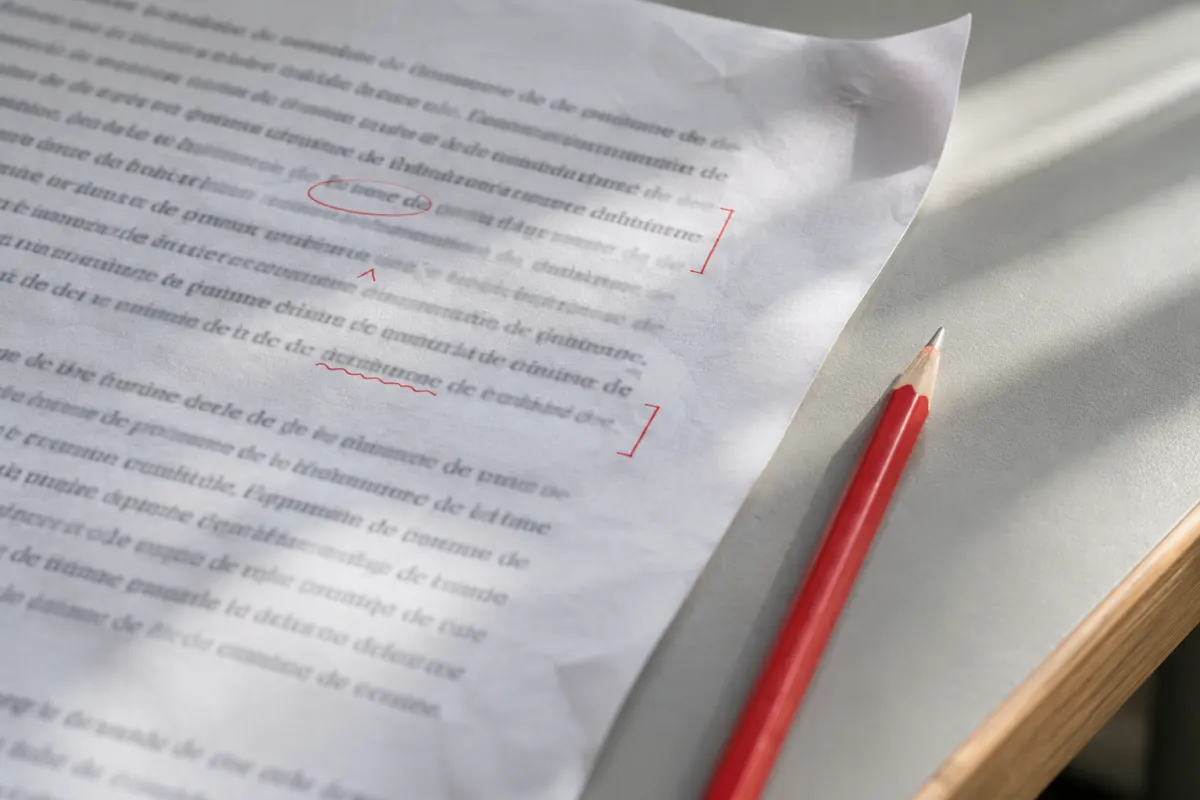
What does a French teacher correct first in a draft?
Read the first draft, try the edits yourself and compare your version with the revised French email.

One French speaking question, two attempts
See the difference a concrete example and a relevant follow-up can make in a French speaking exercise.